Template Website Builders: You Get What You Pay For

Jason Gerard • February 16, 2026

Explore the pros and cons of template website builders for businesses. Discover whether they suit your online journey.
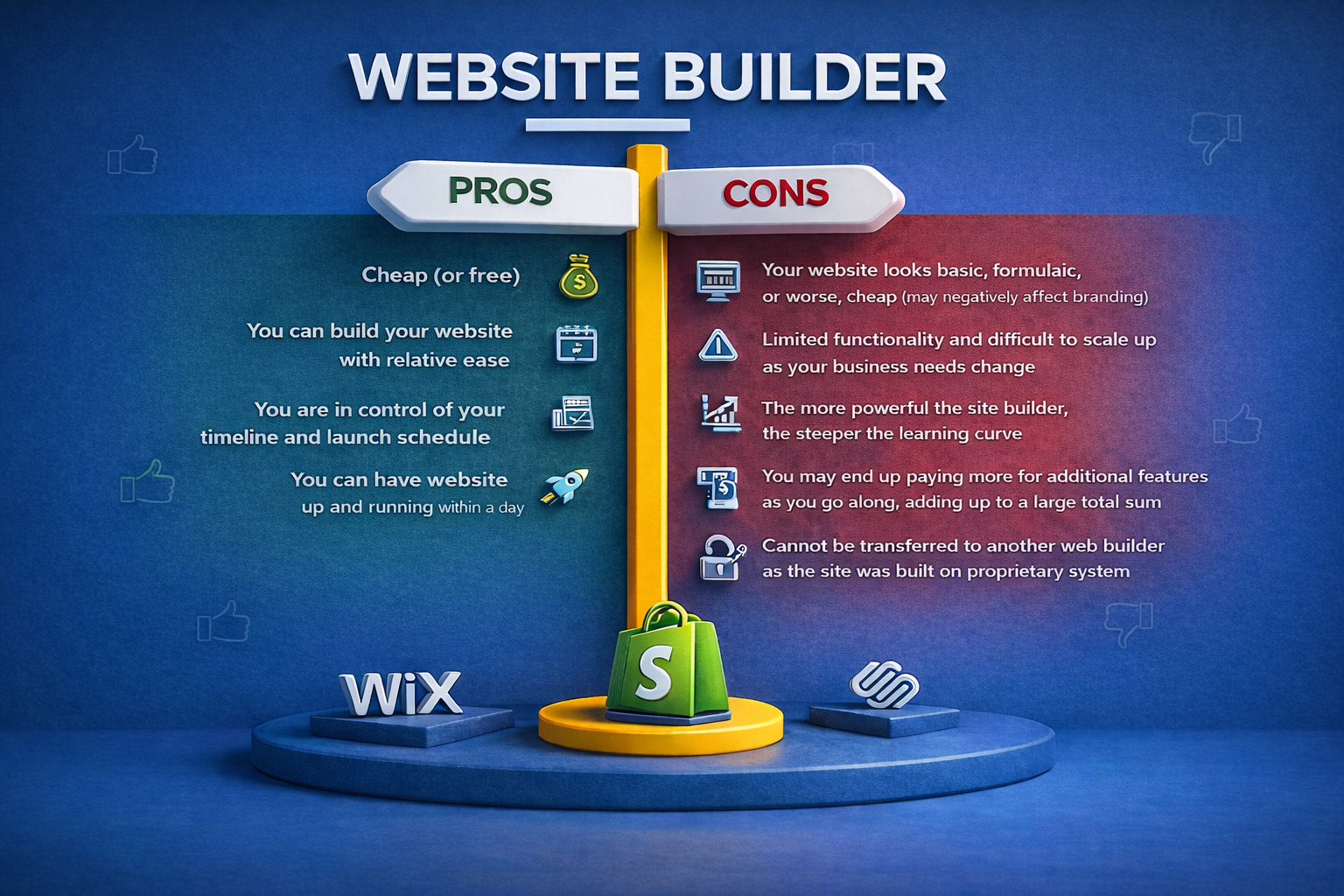

Did you know that over 90% of small businesses fail to make a lasting impact online? One of the biggest reasons is the approach they take toward establishing their digital presence. In this article, we’ll explore the topic of template website builders, shedding light on their advantages and drawbacks, and ultimately answering the question: Are they worth it? As we dive into this crucial subject, we’ll demonstrate how such builders can aid businesses just starting their online journeys while cautioning that they may not support growth as you scale. Understanding the capabilities and limitations of these platforms could be critical for anyone ready to take the leap into the digital realm and ensure their online success.
 
Understanding Template Website Builders
 
Template website builders have surged in popularity, particularly among small businesses and entrepreneurs. Platforms like Wix, Squarespace, and Shopify allow users to create their sites with minimal coding experience, fostering an accessible environment that fuels creativity.
 
Benefits of Template Website Builders
 
1.  Ease of Use

Template builders excel due to their intuitive interface, making them perfect for novices. With drag-and-drop functionalities, anyone can have a website up and running in minutes. This ease of use reduces the barrier to entry for those inexperienced in web development.

2.  Cost-Effectiveness

Many template builders have lower initial costs compared to engaging a web developer or agency. Plans often start as low as $10 a month, enabling businesses to allocate resources to other essential operations instead of sinking large sums into web development.

3.  Quick Launch Times

In today’s digital age, speed is critical. Template builders allow businesses to get online quickly to take advantage of market demands or to establish an online presence sooner rather than later.

4.  Integrated Features

Most platforms come equipped with built-in SEO tools, social media integration, and e-commerce functionalities. This all-in-one capability allows businesses to manage various aspects of their online presence without needing additional tools.

5.  Templates Galore

With numerous customizable templates available, businesses can select designs that reflect their brand identity. These templates are often professionally crafted, saving businesses the time and effort of creating unique designs from scratch.
 
Drawbacks of Template Website Builders

While there are numerous advantages, businesses should remain mindful of potential pitfalls inherent to template website builders:
 
1.  Limitations on Customization

While customization is possible, template builders can restrict bigger changes to the design, potentially hindering creative branding strategies. Users may find themselves trapped within the rigid confines of the templates.

2.  SEO Challenges

The SEO capabilities of template builders, although improving, might not meet the standards of more sophisticated platforms. They often offer limited control over essential SEO attributes, such as meta tags and URL structures, which can affect search engine rankings.

3.  Scalability Issues

As businesses grow, their needs evolve. Template builders may not adequately scale to support high traffic, unlimited products, or extensive SEO strategies. This often prompts users to reconsider their platform as their business expands, leading to secondary expenses related to redesign and migration.

4.  Ownership and Control

Many platform providers retain significant control over user accounts. Should a user choose to leave the platform, migrating content can be a daunting task, resulting in lost hours and resources.

5.  Unreliable Support
Customer service may vary considerably among providers. You might be left without essential support during critical moments, which can exacerbate issues, especially when trying to scale. Limited resources often hinder quick resolutions to problems.
 
The Bottom Line
 
Template website builders can be a fantastic starting point for newcomers to the online business landscape. They simplify the process, provide essential features, and maintain affordable costs, making them attractive to small businesses just beginning their digital journeys. However, organizations that grow or have specific marketing needs might soon find the limitations stark. As your business scales and requirements expand, these templates may fall short in their offer.
 
If you’re contemplating establishing an online presence, evaluate your current needs against your future aspirations. If you foresee rapid growth or require advanced marketing strategies, it could be prudent to consult with knowledgeable experts for a tailored approach.
 
Conclusion: What Changes Can You Make at Home?
 
Template website builders serve a purpose, albeit a limited one. Their strengths lie in accessibility and affordability for budding businesses. The downfalls can become apparent as you require advanced features and broader scalability. Therefore, carefully assess your business's specific needs and potential growth trajectory.
 
Ready to take your online presence to the next level? Request a FREE consultation with a Digital Marketing Expert at Digital eSource today!
 
Your online journey only starts with a template; where you go next defines your digital story. The choices you make today can set the stage for growth tomorrow, so choose wisely and consider all factors involved in your digital strategy!