
Accessibility Compliance: Why This May Be Your Website's Missing Link
Jason Gerard • January 28, 2026
Learn why accessibility compliance may be your website's missing link for broader audience reach, better SEO, and legal safety!
Did you know that approximately 16% of the global population lives with some form of disability? For online businesses, this statistic brings a vital question to the forefront: Is your website accessible to everyone, including those with disabilities? Accessibility compliance is not just an ethical imperative; it's also critical for reaching a wider audience and ensuring that your website complies with legal standards. In this comprehensive guide, we’ll explore why accessibility compliance may be the missing link in your digital strategy and how it can significantly enhance your online presence, improve user experience, and even boost your SEO rankings.
Understanding Accessibility Compliance
Accessibility compliance refers to the measures taken to ensure that websites are usable by individuals with various disabilities. These disabilities may include visual impairments, auditory disabilities, mobility limitations, and cognitive challenges. In the digital world, this means ensuring that all aspects of a website—from content to navigation—are accessible to everyone.
The Importance of Accessibility in Digital Platforms
Legal Obligations: Many countries have laws mandating accessibility standards for websites. The Americans with Disabilities Act (ADA) in the U.S., for instance, necessitates that public websites be accessible to individuals with disabilities. Failure to comply can result in legal consequences that can be costly for businesses.
Ethical Responsibility: Beyond legal obligation, there is a moral imperative to make digital spaces inclusive. Websites that cater to all individuals foster a sense of community and equality.
Wider Audience Reach: By making your website accessible, you not only comply with regulations but also broaden your potential audience. A larger audience translates to increased engagement, higher retention rates, and ultimately more conversions.
Key Components of Website Accessibility
To achieve effective accessibility, several components must be highlighted:
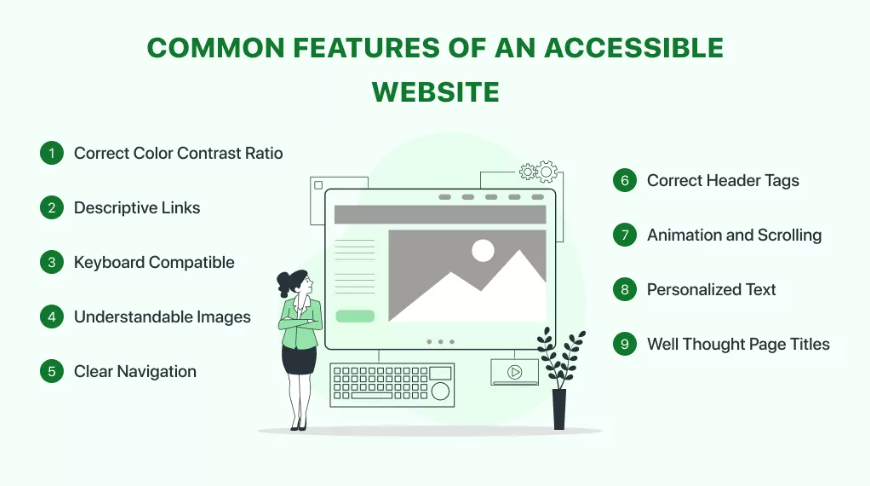
1. Semantic HTML
Using proper semantic HTML allows screen readers to understand the layout of a webpage. This includes using headings, paragraphs, lists, and other HTML elements correctly to guide users through the content.
2. Alt Text for Images
For users who rely on screen readers, providing Alt text is essential. Alt text describes images, videos, and other non-text content, allowing visually impaired users to understand the information conveyed in visual media.
3. Keyboard Navigation
Not all users navigate websites with a mouse; some rely on keyboard navigation. Ensuring that all clickable elements can be reached and activated using a keyboard is crucial for accessibility.
4. Color Contrast and Text Size
High color contrast between text and background increases readability, especially for visually impaired users. Additionally, offering options to adjust font sizes can help users with sight difficulties.
5. Responsive Design
Websites should be responsive so that they function well on various devices, including smartphones and tablets. A responsive design aids users with mobility impairments who may rely on touchscreens.
WCAG Guidelines: The Gold Standard for Accessibility
The Web Content Accessibility Guidelines (WCAG) are an internationally accepted standard for web accessibility. These guidelines outline how to make web content more accessible to people with various disabilities.
Principles of WCAG:
1. Perceivable: Information should be presented in ways that users can perceive.
2. Operable: User interface components should be operable; this means that all functionalities should be available from a keyboard.
3. Understandable: Information and operation of the user interface must be understandable.
4. Robust: Content must be robust enough that it can be interpreted reliably by a wide variety of user agents, including assistive technologies.
For an in-depth exploration of these guidelines, visit WCAG Guidelines.
Testing for Accessibility
Automated Tools
There are various online tools available to help gauge a website's accessibility. Tools like WAVE or Google Lighthouse can provide insights into potential accessibility issues, flag deficiencies, and recommend improvements.
Manual Testing
While automated tools are helpful, manual testing is equally important. This includes navigating your website using only a keyboard and testing it with screen readers.
The Business Case for Accessibility
Investing in accessibility compliance brings numerous financial benefits:
- Increased Traffic: Accessible websites often see a surge in traffic and engagement. This is due to improved SEO rankings since search engines favor websites that offer a better user experience.
- Enhanced Reputation: Companies portrayed as inclusive often gain a more positive public image, leading to customer loyalty.
- Reduced Legal Risks: Ensuring your website is compliant limits potential legal challenges, saving time and financial resources.
Examples of Accessibility Best Practices
Case Study 1: Target
Target faced a lawsuit over its website accessibility in 2006. The company responded by making their website more accessible, leading to a significant increase in sales, showcasing the direct benefits of investing in accessibility compliance.
Case Study 2: Domino's
Domino's Pizza had a highly publicized legal battle over inaccessible website features, eventually leading to an increase in website compliance, which helped facilitate a better customer experience.
Future Trends in Accessibility
- Artificial Intelligence: AI is paving the way for innovative accessibility solutions. For instance, AI-driven voice recognition technology and automated text-to-speech capabilities are providing seamless user experiences.
- Focus on User Experience: As digital marketing evolves, there’s a growing emphasis on user experiences that incorporate accessibility standards, aligning with broader inclusivity goals.